_edited.png)




Enrichment Activities
Every year, we launch an exciting new programme of free clubs designed around our pupils' own ideas and interests. After asking the children what they would love to try, we put together a varied offer that runs before, during, and after school - everyone can find something to enjoy!
At NILA, we understand that there is more to a school than the National Curriculum alone. We are constantly striving to ensure that every student develops a secure understanding and detailed knowledge across PSHE, relationships, and citizenship by tailoring our offer under our NILA Personal Development strands.
We put this into practice through enriching experiences both in and out of the classroom, rooted in our NILA Ethics of kindness, ambition, resilience and respect, in a tailored personal development programme designed to match our students' highest ambitions.

We are deeply committed to fostering confidence, resilience, and independence in our young people, teaching them to reflect deeply and cooperate with integrity so they are thoroughly prepared for life beyond our walls.
Central to our mission is a systematic, proactive approach to pastoral care - our dedicated leaders and staff work to anticipate needs and provide highly effective, targeted support in any area that a student may need.
We ensure that this extensive programming is fully inclusive—guaranteeing that disadvantaged pupils, those with SEND, and students facing learning or well-being barriers participate and thrive equally. The proof of our dedication is clear in our students' outstanding outcomes, their vibrant school experiences, and the clear paths they forge toward their futures.
Intent
The curriculum at New Invention Learning Academy is designed to teach children "today for their tomorrow," equipping pupils with critical thinking skills and lifelong capabilities alongside traditional values such as respect. The academy aims to foster independent, responsible, and resilient learners who strive for excellence. Guided by core values of kindness, ambition, respect and resilience, the intent is to ensure every child is supported, valued, and given equal opportunities to reach their potential.
Teaching is delivered through strategic planning, effective assessment, and ambitious expectations across all curricular areas. The school embeds a clear "Here 100%, Give 100%!" ethos, reinforcing the importance of resilience, regular high-quality work, high attendance, and punctuality. Positive attitudes, active engagement, and high outcomes are consistently praised and rewarded within an inclusive environment.
The impact of this approach is happy, confident, and successful pupils who make significant positive gains and achieve high academic standards. Children leave with strong personal values, high self-expectations, and practical learning skills that serve them now and throughout the rest of their lives.
Implementation
Impact
SMSC & British Values
SMSC and British Values are promoted across our curriculum and daily school life.


PSHE & RSHE
At New Invention Learning Academy, we aim to provide a broad and balanced curriculum tailored to individual pupil needs, which will enable all children to achieve their maximum potential. We also strive to ensure that all pupils develop an enthusiasm for and a love of learning.
Ethos and Values
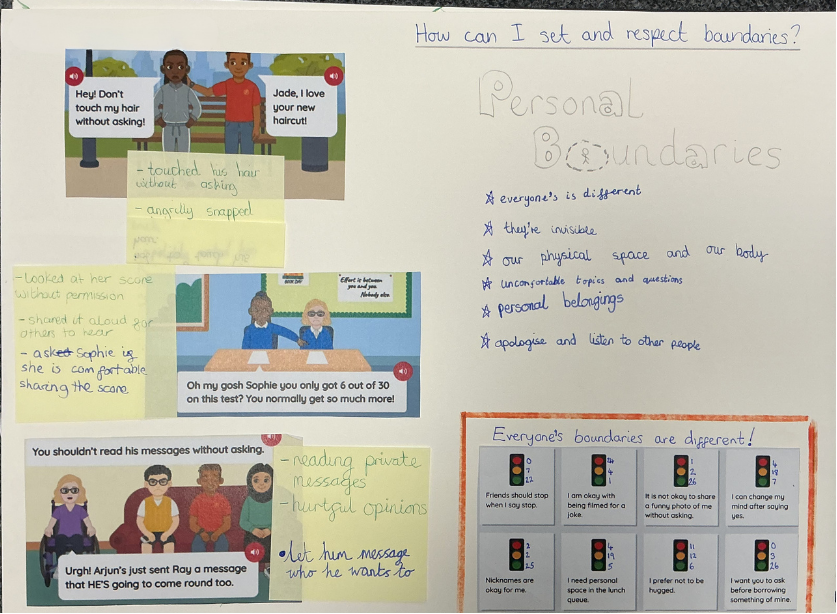
Relationships, sex and health education (RSHE) reflect the values of our PSHE and Citizenship programme whilst promoting self-esteem, emotional health and well-being, and help them form and maintain worthwhile and satisfying relationships, based on respect for themselves and for others, at home, school, work and in the community.
Aims
At New Invention Learning Academy, we aim to provide a holistic education for all children. Every pupil will receive their full entitlement to RSHE regardless of their educational ability, gender, race, disability, ethnicity or faith. We aim to support children in their emotional, cultural and social, as well as academic development.
Contributing to the foundation of PSHE, the school’s RSHE programme aims to explore attitudes and values with children about relationships, emotions, self-esteem and personal safety. Children will develop skills in order to make positive decisions about their health related behaviour. During RSHE, children will ‘develop personal and social skills and a positive attitude to growing up’. We aim to provide a holistic education for all children. Every pupil will receive their full entitlement to RSHE regardless of their educational ability, gender, race, disability, ethnicity or faith. We aim to support children in their emotional, cultural and social, as well as academic development.
Objectives
The school aims to provide a graduated, age-appropriate RSHE programme, emphasising the social and emotional aspects of relationships, which is delivered through PSHE & Citizenship, Science, RE, Computing and English, alongside wider school experiences such as assemblies, visits and visitors.
RSE will teach 7-11 year olds to understand:
-
the range of their own and others’ feelings and emotions;
-
the importance of personal safety and what to do or to whom to go when feeling unsafe;
-
to develop and use communication skills and assertiveness skills to cope with the influences of their peers and the social media;
-
to be prepared for puberty and adulthood, including physical and emotional changes that take place at puberty.
RSHE is taught by classroom teachers, teaching assistants and if appropriate, outside visitors such as the school nurse. A range of teaching methods include use of videos, diagrams, discussion, looking at case studies, drama and role-play.
Sex and relationship education is usually delivered in mixed gender groups. However, there may be occasions where single gender groups are more appropriate.
The minimum statutory requirement for RSHE is that schools must deliver the National Curriculum for Science to all children within school:
Key Stage 2
-
That the life processes common to humans and other animals include nutrition, growth and reproduction.
-
The main stages of the human life cycle, including puberty.
Dealing with Difficult Topics & Questions
All teachers are aware of the ground rules which provide an agreed structure to answering sensitive or difficult questions. Teachers will endeavour to answer questions as honestly as possible, but, if faced with a question they do not feel comfortable answering within the classroom, provision would be made to meet the individual child’s needs.
Parental Consultation
Policies are available on request. The school informs parents when aspects of the sex and relationship programme are about to be taught and will be given an outline of the lessons in advance, so parents/carers are able to support their child's learning and align any conversations that they may have already been having at home with what their child has learnt at school.
Safeguarding & Confidentiality
Teachers need to be aware that effective RSHE, which brings an understanding of what is and is not acceptable in a relationship, may lead to disclosure of a child protection issue.
-
The staff member will inform the Head Teacher/Designated Safeguarding Lead in line with the agreed procedures for child protection.
-
A member of staff cannot promise confidentiality if safeguarding concerns exist.
Monitoring, Assessing and Reviewing
To ensure that the policy is adhered to and is effective, it will be monitored, reviewed and evaluated regularly. The school will assess the effectiveness of the aims, content and methods in promoting pupils’ learning by lesson observation, sampling teachers' planning, questionnaires to teachers and children and feedback from parents. The effectiveness of the RSHE programme will be evaluated by assessing children’s learning and implementing changes if required.
School Council
Our democratically-elected School Council is a big part of the work being done within school to promote Personal Development, aspects of SMSC as well as the core aspects of British Values - democracy, the rule of the law, individual liberty, mutual tolerance and respect.
At the start of the school year, each class explore the term ‘democracy’ before anyone who wants to be a class representative puts their name forward. Our council provides opportunities for children to become more confident speakers and better listeners as they share their classmates' ideas. They help to solve problems, work as a team, and make positive changes that make their school a better place.